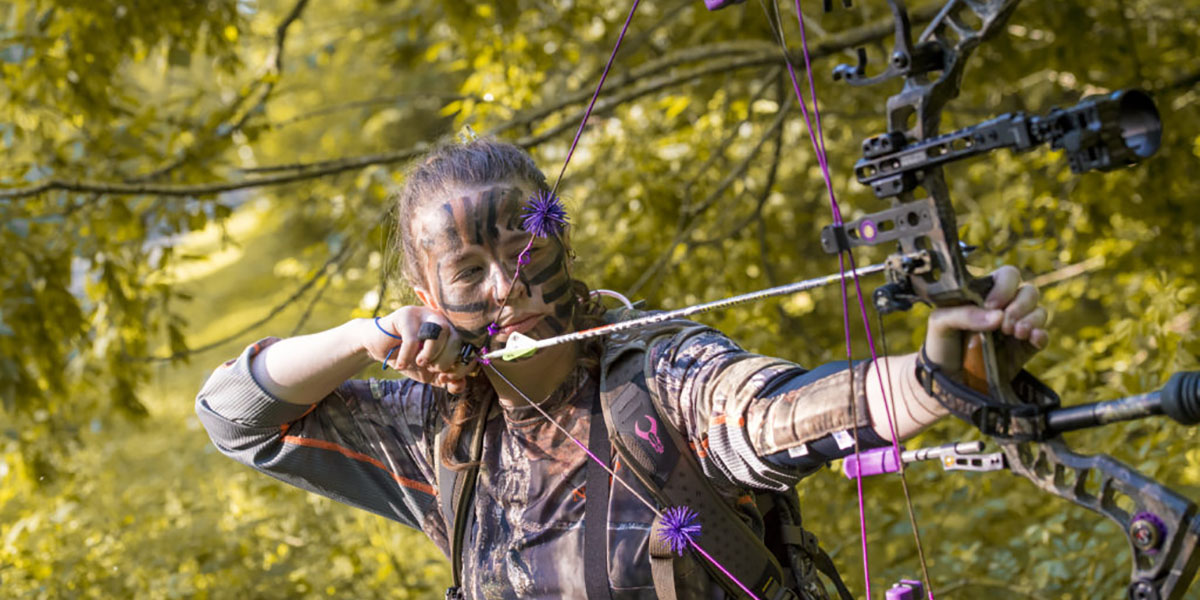
Picking a compound hunting bow that truly fits both your body and your hunting style is one of the most important gear decisions you’ll ever make. You don’t just carry a bow for a weekend and put it away; you live with it through an entire season, across long hikes, cold mornings, and the few heart-pounding seconds that determine whether you come home with a tag filled or an excuse ready.
When a bow matches a hunter properly, it almost stops feeling like equipment and starts feeling like part of your body. It comes to full draw smoothly, settles naturally on target, and works with your form instead of fighting against it. That “perfect fit” translates directly into better efficiency, better control, and ultimately better shooting when it matters most.
How the Wrong Bow Holds You Back
The wrong hunting bow doesn’t just feel a bit annoying; it can stack problems on top of each other until your accuracy and confidence start to fall apart.
-
If the draw weight is too high, you may struggle to pull the bow back quietly and smoothly on a live animal. Once you do manage to reach full draw, your muscles fatigue quickly, your pin starts to shake, and holding steady long enough for a clean shot becomes a real challenge.
-
A bow that doesn’t fit your draw length or geometry makes consistent aiming harder. You end up fighting your anchor, adjusting your head, or contorting your posture just to see clearly through the peep.
-
An overly heavy or bulky bow can be a serious burden if you hunt steep country, cover lots of ground, or push through thick brush. Every extra ounce becomes more noticeable after hours of still-hunting or spot-and-stalk.
-
Poorly fitted or overweight bows often lead to bad habits: collapsing at the shot, punching the trigger, dropping the bow arm, or “cheating” your anchor position just to get comfortable. Those habits are tough to erase later.
-
Buying an ill-suited bow usually costs more in the long run. You end up selling it at a loss or letting it collect dust while you pay full price again for something that should’ve been your first choice.
So choosing a hunting bow is about much more than a big brand name or matching your camo. With so many new models and technologies every year, it’s easy to feel lost in the options. The goal of this guide is to walk through the standout new compound bows, show how they performed in testing, and then break down the key factors to consider so you can decide which one actually fits you.
Best New Compound Hunting Bows – Tested and Ranked
Below are nine of the top new compound hunting bows, ranked after comprehensive testing for speed, accuracy, draw cycle, noise, vibration, handling, and overall value.
1. Editor’s Pick – Bowtech Realm SR6
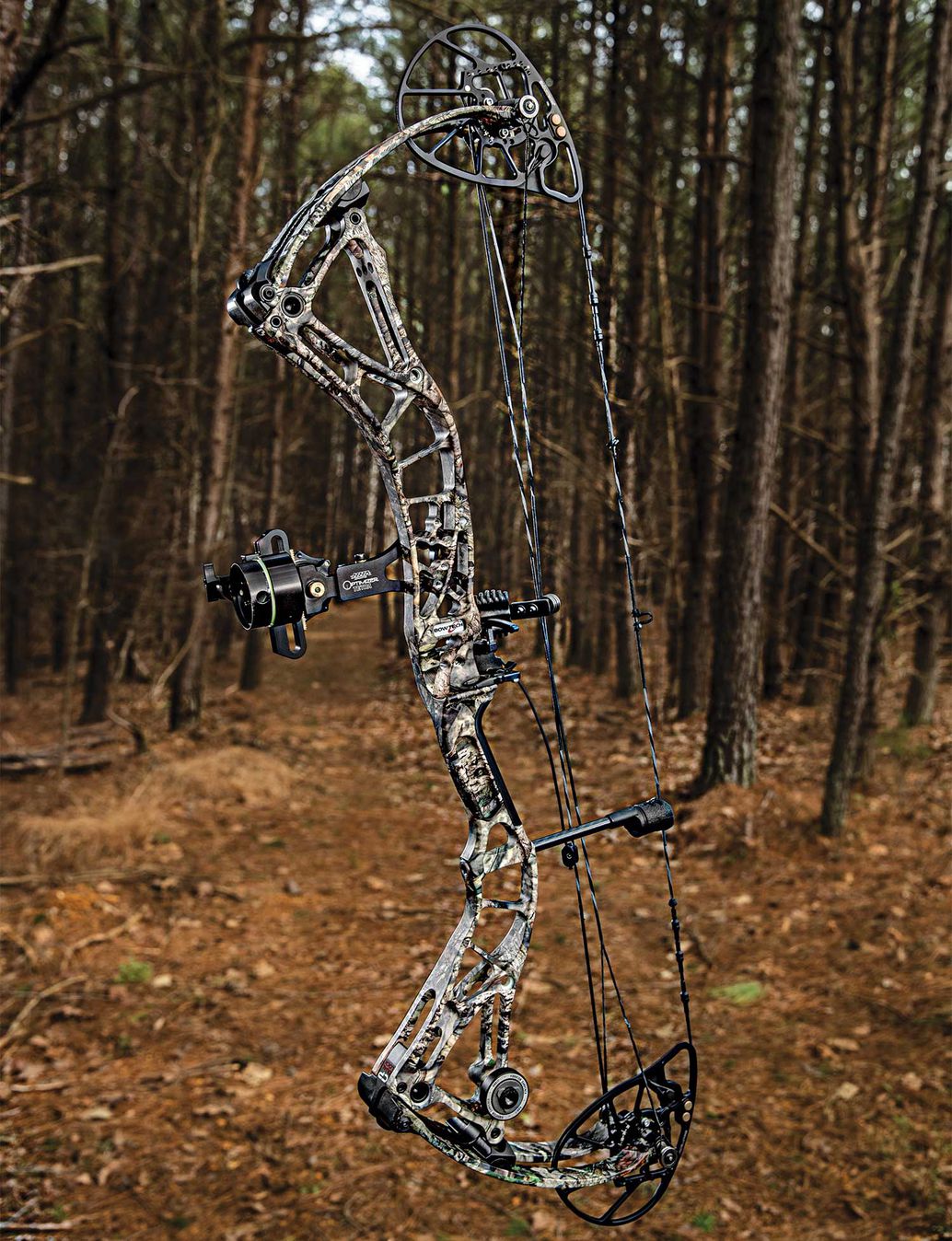
Bowtech Realm SR6 • 349.1 fps • $1,199
Performance breakdown:
| Category | Rating |
|---|---|
| Speed | Excellent |
| Accuracy & Forgiveness | Excellent |
| Draw Cycle | Excellent |
| Noise | Fair |
| Vibration | Very Good |
| Handling | Excellent |
| Fit & Finish | Excellent |
| Value | Very Good |
The Realm SR6 rose to the top of the test by performing near the front of the pack in almost every single category. Bowtech has been known for years for its tunable draw-cycle systems that let shooters tailor the feel of the bow. Earlier generations used a rotating disc with three settings; the current Realm platform, including the SR6, uses a more intuitive module system with two clear options: Comfort and Performance.
That change makes the tuning process much simpler for everyday hunters. We tested the SR6 in both configurations but scored it in the more aggressive Performance setting. Even there, where you’d expect a stiff and unforgiving draw, the bow was surprisingly smooth, stacking weight in a controlled, predictable way. Despite that, it still walked away as the speed king of the test at 349.1 fps.
A big part of that speed comes from the Overdrive Binary cam system, where Bowtech added strategically placed weights that look like small brass “buttons” on both cams. Those weights help the cam timing and energy transfer, translating into high arrow speeds without turning the draw stroke into a miserable chore.
On the target line, the Realm SR6 proved that its speed didn’t come at the cost of control. Our four-shooter test panel averaged 1.07-inch groups, making it the accuracy winner. Objective testing showed very little residual hand shock or vibration, good enough for third place in that category. The bow also posted an impressive 86-percent efficiency rating, the best in the group, meaning more of your stored energy becomes arrow speed instead of wasted noise and kick.
Its only noticeable weakness was noise: it landed in the middle of the field in our sound tests. It’s not obnoxiously loud, but some competitors were clearly quieter. In terms of handling, balance, and overall looks, the Realm SR6 feels well-engineered and finished. For hunters wanting a bow that is fast, accurate, and very shootable out of the box, it’s easy to see why this one earned the editor’s choice spot.
2. Mathews Vertix

Mathews Vertix • 337 fps • $1,099
Performance breakdown:
| Category | Rating |
|---|---|
| Speed | Good |
| Accuracy & Forgiveness | Very Good |
| Draw Cycle | Very Good |
| Noise | Excellent |
| Vibration | Excellent |
| Handling | Excellent |
| Fit & Finish | Excellent |
| Value | Very Good |
Fans of the Mathews Halon and Triax series will feel immediately at home with the Vertix. It continues the brand’s recent trend of building remarkably dead-in-hand, quiet hunting bows. In our testing, the Vertix was both the quietest and the most vibration-free model in the lineup, which says a lot considering the quality of this field.
The Vertix uses Mathews’ Crosscentric cam system but adds the updated Switchweight technology. Instead of swapping limbs or cams to change draw weight and length, you can use different modules to adjust both. That modular approach is a big advantage for hunters who want to fine-tune draw weight over time, or who might share the bow with another shooter.
Another nice detail is the dovetail mount machined into the riser, designed to accept QAD’s UltraRest MXT. This integrated mounting method cleans up the setup and could eventually make old-style Berger bolt mounts feel obsolete.
There are trade-offs, though. The Vertix was the heaviest bow in the test at just under 4.7 pounds bare. Add a sight, rest, and quiver and you have a substantial rig. It also delivered mid-pack speed at 337 fps—plenty for hunting, but not as blistering as some of the rockets in this group. The draw cycle, while smooth overall, felt a bit more demanding than we expected from Mathews’ reputation, especially compared with the very top contenders.
Accuracy was solid but not class-leading. Our panel averaged 1.37-inch groups, which is more than accurate enough for realistic hunting shots but behind the Realm and Ritual 35. Where the Vertix truly shines is in shot comfort: minimal jump, almost no vibration, and a quiet report that bowhunters in thick timber or pressured areas will really appreciate.
3. Elite Ritual 35

Elite Ritual 35 • 336.7 fps • $1,049
Performance breakdown:
| Category | Rating |
|---|---|
| Speed | Good |
| Accuracy & Forgiveness | Excellent |
| Draw Cycle | Very Good |
| Noise | Good |
| Vibration | Good |
| Handling | Excellent |
| Fit & Finish | Excellent |
| Value | Excellent |
For a while, long axle-to-axle bows were the trendy choice, then the market swung hard toward compact rigs. The Elite Ritual 35 reminds you why longer bows earned their loyal following in the first place. With its 35-inch axle-to-axle length, this bow settles into the target picture in a way shorter bows sometimes struggle to match.
In testing, the Ritual 35 felt incredibly stable at full draw. Our shooters repeatedly commented on how “calm” the sight picture looked. That stability translated into real performance: we averaged 1.12-inch groups, which was second only to the Bowtech. The draw cycle is classic Elite—smooth, controlled, and pleasantly progressive. It eases into a solid back wall with a generous valley that lets you stay at full draw without feeling like the bow is trying to yank you forward.
Speed was respectable at 336.7 fps, though not blazing. Noise and vibration scores were also middle-of-the-road—not bad, but a step behind the absolute quietest and deadest bows in the test. Where the Ritual 35 really stands out is in overall feel and shootability, especially for archers who prefer a longer, more forgiving platform for both hunting and target work. Combined with a strong value rating, it’s an easy bow to recommend if you prioritize consistency and comfort over raw speed.
4. Hoyt Helix

Hoyt Helix • 340.8 fps • $1,199
Performance breakdown:
| Category | Rating |
|---|---|
| Speed | Very Good |
| Accuracy & Forgiveness | Very Good |
| Draw Cycle | Good |
| Noise | Very Good |
| Vibration | Good |
| Handling | Very Good |
| Fit & Finish | Excellent |
| Value | Good |
The Helix is one of the few bows in this test that cracked 340 fps, and it did it without feeling like a harsh, unmanageable speed bow. Clocking 340.8 fps, it is firmly in the fast category. At the same time, it turned in the second-quietest sound reading of the entire group, which is impressive for a bow with this kind of output.
Accuracy, vibration, and handling scores were all strong, and the overall look and finish are classic Hoyt—clean machining, good coatings, and a professional build quality. Some testers loved the grip, while others weren’t completely sold on its shape, so that’s one feature worth trying in person.
Where the Helix gives up a little ground is in the draw cycle. The front half of the draw feels fairly stout, and it doesn’t ease you in quite as gently as the top-scoring bows. It’s still manageable for a reasonably conditioned shooter, but if you’re sensitive to draw stiffness, you’ll notice the difference.
Hoyt introduced a new ZT (Zero Torque) cam system with the Helix, using two sizes to cover different draw ranges—one cam set covers 25–28 inches and another 27–30 inches. The bow also features a Split-Cable system designed to eliminate the need for a flexing cable guard, which theoretically reduces torque on the riser and can improve consistency. The Helix will appeal to shooters who want a fast, quiet hunting bow with Hoyt’s build quality and don’t mind a more assertive draw stroke.
5. PSE Evoke 31
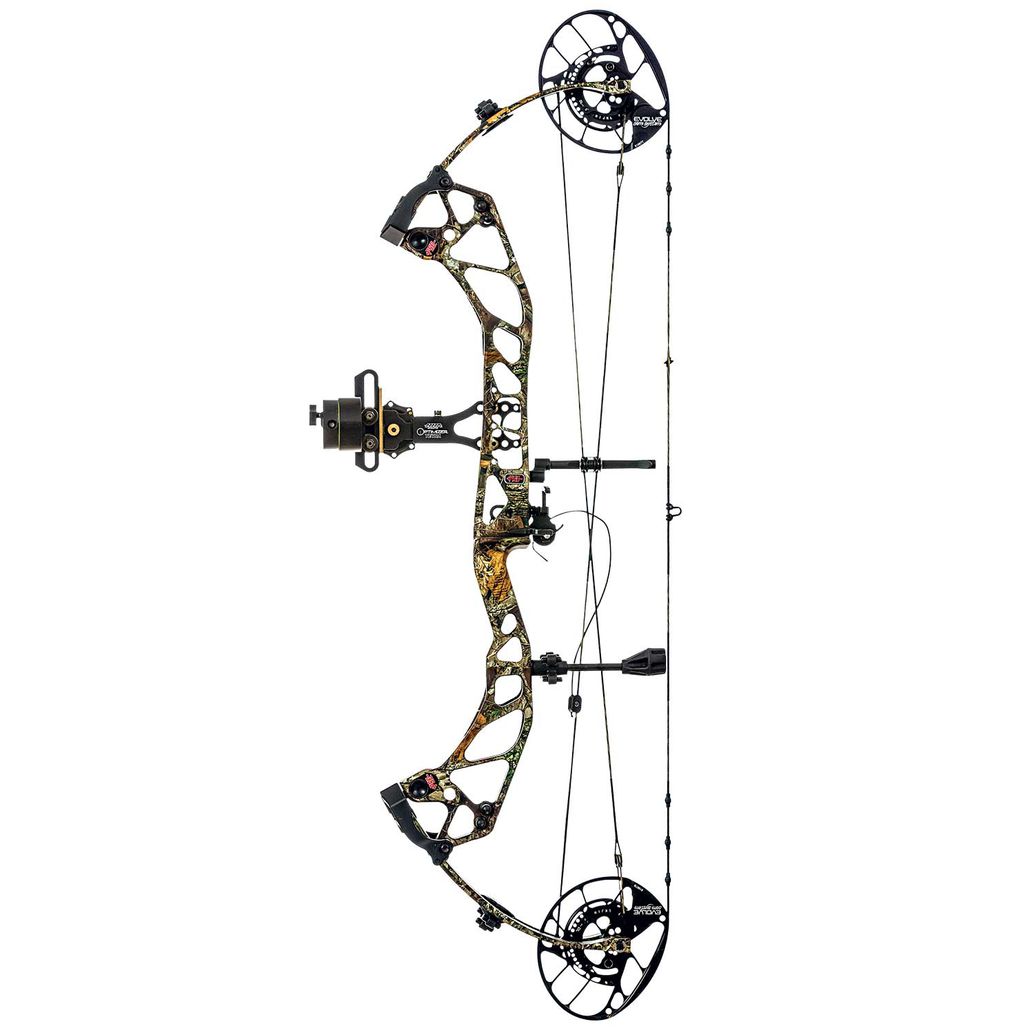
PSE Evoke 31 • 339.7 fps • $1,000
Performance breakdown:
| Category | Rating |
|---|---|
| Speed | Good |
| Accuracy & Forgiveness | Good |
| Draw Cycle | Very Good |
| Noise | Fair |
| Vibration | Poor |
| Handling | Excellent |
| Fit & Finish | Good |
| Value | Very Good |
PSE’s Evolve platform almost took top honors in last year’s testing, and many of us liked the new Evoke 31 even more from a pure shooting perspective. That makes its mid-pack final ranking more a reflection of intense competition than any real failing in the bow itself.
The Evoke 31 uses the Evolve Cam System and offers a generous 90 percent let-off, which is a welcome feature for hunters who may need to hold at full draw while waiting for a shot angle. The updated caged riser adds rigidity and strength while still keeping the bow nimble in the hand, and overall it was one of the best-handling rigs in the group. At 339.7 fps, it finished as the fifth-fastest bow in the test.
Where it slipped was consistency and shot feel. Our testers averaged 1.48-inch groups, slightly larger than the overall test average. That’s still acceptable hunting accuracy, but it lagged behind the leaders. Like its predecessor, the Evoke 31 struggled in noise and vibration measurements, finishing near the bottom of the field. The bow is certainly shootable and has a pleasing draw cycle, but if you prioritize a whisper-quiet, dead-in-the-hand feel, this may not be your first pick. On the other hand, considering its performance and price, it offers strong value for speed-minded hunters who can live with a little extra feedback in the shot.
6. Obsession FX30 (Tied)

Obsession FX30 • 333.6 fps • $999
Performance breakdown:
| Category | Rating |
|---|---|
| Speed | Fair |
| Accuracy & Forgiveness | Very Good |
| Draw Cycle | Fair |
| Noise | Good |
| Vibration | Very Good |
| Handling | Good |
| Fit & Finish | Good |
| Value | Very Good |
Compact and easy to maneuver, the FX30 is a trim, lightweight bow that a lot of hunters will enjoy carrying in tight cover or treestands. On the range, our panel shot it well, turning in an average group size of 1.38 inches, which is comfortably in the “very good” category for a hunting rig.
The bow did well in vibration testing, with relatively little lingering shock at the shot, and it placed around the middle of the group for noise. The price—just under a thousand dollars—also helped earn it a strong value rating.
The big caveat is the draw cycle versus actual speed. The FX30 loads heavily at the front of the draw, and you feel that weight as you roll through the cycle. Once you get behind the hump, it drops into a solid back wall with a workable valley, but the initial load is noticeable. That would be easier to overlook if the bow hit its advertised IBO rating of 360 fps. Instead, we measured 333.6 fps, making it the second-slowest bow in the test. That gap between advertised speed and reality didn’t impress the test crew. If you like the Obsession feel and want a nimble, accurate bow, the FX30 still has plenty going for it, but don’t buy it expecting “class-leading speed.”
7. Xpedition Mako X (Tied)

Xpedition Mako X • 343.1 fps • $1,099
Performance breakdown:
| Category | Rating |
|---|---|
| Speed | Very Good |
| Accuracy & Forgiveness | Good |
| Draw Cycle | Fair |
| Noise | Very Good |
| Vibration | Excellent |
| Handling | Good |
| Fit & Finish | Good |
| Value | Good |
With its short 5-inch brace height and aggressive styling, the Mako X looks like a speed bow – and it absolutely is. At 343.1 fps, it was the third-fastest bow in the test, although still roughly 21 fps shy of its advertised top-end spec. At the same time, this was the lightest bow in the lineup at just 3.9 pounds, which makes it very appealing for hunters who hike hard or prefer minimalist setups.
Given that combination of low weight and high speed, you might expect a harsh, jumpy shooting experience. Surprisingly, that wasn’t the case. The Mako X actually recorded the second-lowest vibration reading of the test, making it impressively well-behaved at the shot for such a fast bow.
The trade-off shows up in the draw cycle and overall precision. The draw is classic speed-bow aggressive—stout, with a quick rise into peak weight—and we docked it accordingly. In terms of accuracy, the bow landed in the lower third of the rankings; our shooters averaged 1.51-inch groups, and several noted that it was harder to get the sight picture to settle quietly on target. If you value a light, fast rig and don’t mind a demanding draw and a bit more effort to hold steady, the Mako X can be a fun and very capable hunting bow.
8. Prime Logic CT3

Prime Logic CT3 • 326.4 fps • $999
Performance breakdown:
| Category | Rating |
|---|---|
| Speed | Poor |
| Accuracy & Forgiveness | Good |
| Draw Cycle | Good |
| Noise | Good |
| Vibration | Very Good |
| Handling | Very Good |
| Fit & Finish | Very Good |
| Value | Very Good |
The Logic CT3 didn’t fail outright in any category, but it rarely rose to the top either. It delivered a solid but unspectacular performance across most metrics, earning middle-of-the-pack scores overall.
In accuracy testing, it landed near the back half of the field, and at 326.4 fps it was the slowest bow in the group. That doesn’t mean it’s underpowered for hunting—those speeds are still sufficient for most realistic scenarios—but speed chasers will look elsewhere. Our panel averaged 1.6-inch groups, which are still plenty workable inside regular bowhunting distances but noticeably larger than what we saw from the top three bows.
On the positive side, the CT3 had one of the best back walls in the test: solid, defined, and easy to anchor against. It sat nicely on target and handled well, with good balance and a comfortable overall geometry. Noise levels were reasonable, and vibration was well controlled. For shooters who already like Prime’s unique feel and parallel cam system, the CT3 will feel like a refined upgrade over the original Logic. With an MSRP that’s about $200 lower than last year’s model, it also scores well on value, especially if raw speed isn’t your top priority.
9. Bear Perception

Bear Perception • 345.5 fps • $1,500
Performance breakdown:
| Category | Rating |
|---|---|
| Speed | Excellent |
| Accuracy & Forgiveness | Fair |
| Draw Cycle | Poor |
| Noise | Good |
| Vibration | Poor |
| Handling | Good |
| Fit & Finish | Good |
| Value | Poor |
With its shoot-through riser, the Perception immediately stands out visually from the rest of Bear’s hunting lineup. It looks like a heavy, target-style rig, but on the scale it comes in at a reasonable 4.3 pounds. On the chronograph, it impressed: at 345.5 fps, it was second only to the Bowtech in pure speed. The finish quality and overall appearance are also some of the best we’ve seen from Bear in a while.
Unfortunately, the shooting experience didn’t quite live up to the promising specs. The Perception showed more vibration than any other bow in the test, leaving a noticeable buzz in the hand after the shot. The shoot-through configuration, while popular in some target circles, made loading arrows from the side more cumbersome—an annoyance in practice that could become a real hassle when you’re trying to nock a broadhead quietly in a treestand or blind.
Our testers also struggled to shoot this bow as well as the others. The back wall felt soft and spongy rather than solid, and the valley forced you to actively fight the bow at full draw to keep from creeping forward. Over time, that kind of feel can be tiring in the field. Combine those complaints with the highest price tag in the lineup, and the Perception ends up looking like an interesting engineering exercise that doesn’t quite justify its cost for most hunters.
Key Factors to Consider Before Buying a Compound Hunting Bow

With so many modern compound bows on the market, it’s easy to feel overwhelmed by choices and specs. Picking the right one is a lot like shopping for a vehicle: if you walk onto a lot with no idea whether you need a work truck, a family car, or a little weekend toy, every option starts to blur together and the decision becomes exhausting.
The easiest way to cut through the confusion is to start with purpose. Ask yourself, clearly and honestly:
“What is my main use for this bow—hunting, target competition, or casual recreation?”
Most people who end up with hunting rigs came to archery either through competition or through chasing game, and your primary goal should drive the style of bow you choose. In this section, we’ll focus on features and specs that matter most for a hunting compound bow.
Speed: Arrow Velocity and Real-World Performance

When hunters talk about new bows, speed is usually the first word tossed around. Fast numbers grab attention, and manufacturers know it. Ten or fifteen years ago, a bow that broke 250 fps was something to brag about. With today’s cams, limbs, and strings, some models are pushing into the 350–370 fps range.
Speed matters, especially for hunting, but it needs to be understood in context.
The Problem of “Jumped String”
If you’ve bowhunted for any length of time, you’ve probably seen an animal “duck the string.” You release, the bow makes noise, the animal drops or moves just enough, and your arrow sails high or hits too far back. It’s a sickening feeling, and it immediately makes you wish your bow were quieter, faster, or both.
Higher arrow speeds give you:
-
A flatter trajectory, which makes range-estimation errors less costly
-
Less time between release and impact, reducing how far an animal can move
-
More energy at the target for better penetration when everything else is equal
So yes, speed can help you get more ethical, clean kills in marginal situations. But it’s crucial to remember that speed by itself is not the ultimate goal. A nasty draw cycle, poor accuracy, or excessive vibration will do more harm than a handful of extra fps will ever fix. Think of speed as one piece of the puzzle instead of the whole picture.
Achieving Accuracy: Hitting What You Aim At

If speed isn’t the final answer, accuracy is the thing that should sit at the top of your priorities. Arrow velocity doesn’t matter much if you can’t consistently hit the spot you’re aiming at. For most hunting situations, dependable accuracy at realistic ranges is far more important than chasing every last foot per second.
Even with a bow that “only” shoots around 300 fps, your arrow covers the length of a football field in roughly one second. The question isn’t whether the arrow can get there—it’s whether you, your bow, and your setup can put it in the right place.
Brace Height and Forgiveness
One big design factor in how forgiving a bow feels is brace height—the distance from the deepest part of the grip to the bowstring when the bow is at rest. In simple terms, brace height tells you how long the arrow stays on the string during the shot. The longer that contact time, the more opportunities your form flaws have to influence the arrow. The shorter that time, the less forgiving the bow tends to be.
-
Taller brace height (for example, 7–8 inches): usually easier to shoot accurately and more forgiving of small mistakes, but slightly slower.
-
Shorter brace height (around 6 inches): generally faster, but more sensitive to torque, grip changes, and other form issues.
Most hunters find that a brace height around 7 inches gives an excellent balance between speed and forgiveness. Six-inch brace-height bows are often labeled speed bows, and eight-inch and up designs are more common in dedicated target rigs. Anything outside the 6–8-inch range is usually tailored for a special role or a specific type of shooter.
If your form is rock-solid and repeatable, you can take advantage of shorter brace heights without paying a big accuracy penalty. If you’re still working on consistency—or you know you’ll be shooting in awkward positions from treestands, saddles, or steep sidehills—a slightly more forgiving brace height can help you keep arrows where they need to go.
Focusing on Getting Better as a Shooter
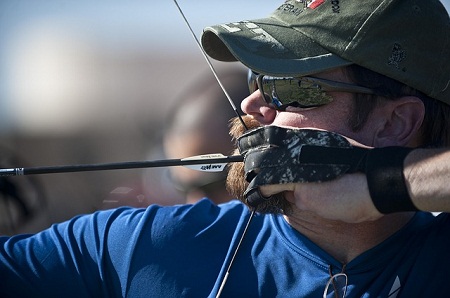
The difference between a forgiving bow and a demanding bow is a lot like the difference between beginner-friendly golf clubs and the razor-thin blades used by professionals. Put Tiger Woods in his prime and a casual weekend golfer on the same tee with the same tour-level clubs, and the results aren’t going to be close. Those clubs demand perfect form and punish every tiny mistake.
A short-brace-height speed bow works the same way. If your grip torque, anchor, and release are dialed in and you can repeat them shot after shot, the bow will reward you with speed and precision. If you’re still inconsistent—twisting the riser, collapsing at the shot, or wobbling in the valley—your groups will open up in a hurry.
That’s why the best plan is to:
-
Learn how to shoot a compound bow correctly, with good coaching or at least solid instruction.
-
Put in enough practice that your shot sequence becomes automatic and repeatable.
-
Only then start worrying about squeezing every last fps out of your setup with aggressive specs.
Until your form is truly solid, a slightly more forgiving bow will usually let you build confidence faster and make better hits in real hunting situations.
Overall Bow Weight and Carry Comfort

How heavy your bow is—and how that weight is distributed—matters more than some spec sheets make it seem. Again, the right choice depends on what you’re actually doing with the bow.
For target or backyard practice, a heavier bow can even be an advantage. The extra mass helps stabilize the sight picture and soaks up vibration, and you can always set it down between shots. But in the field, especially on longer hunts, all that weight is strapped to your shoulder, on your back, or held in your hand for hours at a time.
Remember that the “weight” listed by manufacturers is almost always the bare bow weight. Once you add:
-
Sight
-
Rest
-
Quiver
-
Arrows and broadheads
-
Stabilizer or other accessories
you’ve added a noticeable amount of mass to the package.
Practicing With Your Actual Hunting Setup
If you plan on hunting, it’s smart to practice exactly how you’ll shoot in the field: with a quiver full of arrows attached and all your real accessories mounted. The extra weight of a loaded quiver doesn’t sound like much on paper, but it changes balance and how the bow reacts in your hand, especially for longer shots.
At 20 or 30 yards, you might not see a big difference. At 50 or 60 yards, that shift in balance and inertia can start to show up in your groups. When the adrenaline hits during a real encounter, you want your muscles and brain working with a familiar setup, not something that feels subtly different from what you’ve trained with.
Let-Off: How Much Weight You Hold at Full Draw
Let-off is the percentage of draw weight that the cam system “gives back” at full draw. A bow with 70-pound peak draw and 80 percent let-off leaves you holding roughly 14 pounds at full draw. The rest is being carried by the cams.
As you draw a compound bow, the weight ramps up to a peak, then drops into the valley. That mechanical advantage is what makes it possible to hold at full draw long enough to wait for the perfect shot angle.
High let-off offers several advantages:
-
It makes it easier to stay at full draw while an animal clears brush or turns broadside.
-
It reduces shaking and fatigue while you’re aiming, which helps accuracy.
-
It provides a little more forgiveness if your heart rate is pounding and you need a few extra seconds to settle.
Why Let-Off Matters to Hunters
For hunting, let-off is one of the big reasons compound bows became so dominant. Being able to pull 60 or 70 pounds and then comfortably hold at full draw allows you to stay ready without burning out your shoulders.
The higher the let-off (within reason), the longer you can maintain that ready position. That can mean the difference between getting the shot off at the right moment or being forced to let down and spooking the animal. Many bowhunters intentionally choose cams with high let-off percentages for exactly this reason.
One important note: some states regulate maximum let-off for legal hunting bows. Before you buy, check your local regulations to make sure your setup is compliant.
Draw Length: Getting the Fit Right

Draw length is one of the most critical fit dimensions on a compound bow. It determines how far you pull the string and where the bow stops at full draw. Getting it right is essential for comfort, consistency, and injury prevention.
Most methods of measuring draw length rely on your wingspan or arm length and convert that measurement into a recommended starting point. If your draw length is set too long:
-
You’ll feel stretched out and over-extended at full draw.
-
Peak weight can occur later in the draw, putting more stress on your shoulder.
-
Your head and neck position may be off, and your anchor points won’t feel solid.
If it’s set too short:
-
You’ll end up bending your bow arm or scrunching forward to reach your anchor.
-
Your alignment will be off, and you’ll lose some power and consistency.
Choosing and Setting Draw Length
Because draw length is so important, it’s worth getting measured and fitted at a reputable pro shop whenever possible. A good technician can:
-
Measure your wingspan or use other methods to estimate your ideal draw length
-
Watch you shoot and fine-tune the setting so your anchor feels natural and repeatable
-
Help you avoid common problems like string slap, over-extension, and shoulder strain
Modern compound bows handle draw-length adjustment in different ways. Some use rotating modules that you can change at home with basic tools, allowing adjustment across a wide range of lengths. Others require swapping cams or using a press and specialty parts. If you’re still growing or know your form may change, a bow with a generous, easy draw-length adjustment is a big plus.
For a quick visual reference, many archery charts use a simple wingspan-based formula, which is often illustrated in draw-length graphics like the one below.

Draw Weight: How Much Force You Can Really Handle
Not all compound bows are equally flexible in their draw-weight ranges. Some are built with narrow adjustment windows—10 pounds is common. For example, a bow might be designed to adjust from 50 to 60 pounds, and anything outside that window requires different limbs or even different cams.
Other models, especially those aimed at growing shooters or new archers, may span a much wider range, such as 13 to 70 pounds.
Choosing the right draw weight is a balancing act:
-
Too heavy, and you struggle to draw smoothly, especially in cold weather or awkward positions.
-
Too light, and you may not meet legal minimums or generate enough energy for reliable penetration on big game.
Recommended Draw-Weight Ranges for Modern Compound Bows
The following general ranges give a starting point based on body size and build:
| Shooter Type | Suggested Draw Weight |
|---|---|
| Very small child (55–70 lbs) | 10–15 lbs |
| Small child (70–100 lbs) | 15–25 lbs |
| Large child (100–130 lbs) | 25–35 lbs |
| Small-framed women (100–130 lbs) | 25–35 lbs |
| Medium-framed women (130–160 lbs) | 30–40 lbs |
| Athletic older boys (130–150 lbs) | 40–50 lbs |
| Small-framed men (120–150 lbs) | 45–55 lbs |
| Large-framed women (160+ lbs) | 45–55 lbs |
| Medium-framed men (150–180 lbs) | 55–65 lbs |
| Large-framed men (180+ lbs) | 65–75 lbs |
These are guidelines, not hard rules. Individual strength, age, and conditioning matter a lot. Always choose the heaviest weight you can draw smoothly and controllably, without straining, even when you’re cold or a little tired.
State Regulations and Ethical Considerations
Many states have a minimum legal draw weight for hunting big game—often around 40 pounds for compound bows. Those laws exist to promote ethical kills. Even with perfect shot placement, a bow that’s too weak may not generate enough kinetic energy for good penetration, leading to wounded animals and difficult recoveries.
When I first became old enough to hunt deer, I knew my state required at least 40 pounds. I spent months shooting daily and doing push-ups to build strength, slowly creeping my bow up until I could comfortably and confidently hold that weight. That process didn’t just make me legal; it made me a better shooter.
Some bows let you adjust draw weight at home in seconds with a simple Allen wrench. Others need shop work to change limbs or cams. When you’re choosing a bow, think not only about your current strength but also where you want to be in a year or two, and how easily the bow can grow with you.
Sights: Aiming Systems for Real-World Hunting
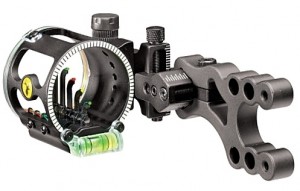 Your bow sight is the aiming system that translates distance into a precise hold point. Most hunters set individual pins for specific ranges—20, 30, 40 yards, and so on—and learn where to float those pins on an animal at different distances.
As bows and arrows have become faster and more consistent, sight technology has evolved alongside them. Today’s sights offer better fiber optics, clearer pins, micro-adjustments, and even built-in range compensation. The sheer variety can feel dizzying.
Different Types of Bow Sights
There are almost as many sight configurations as there are bow models, and each style shines in certain hunting situations:
-
Multi-pin fixed sights (for example, 5- or 7-pin):
Great for spot-and-stalk or still-hunting where shot distances can change quickly. You can range, draw, and instantly choose the correct pin without adjusting anything. A 7-pin sight might give you aiming points from 20 all the way to 80 yards in 10-yard increments if your setup and skills justify it. -
Single-pin or floating-pin sights:
Ideal for setups where you can anticipate shot distance in advance, such as treestands, ground blinds, or ambush points. You dial the sight to the exact ranged distance, then use one pin to aim precisely. This keeps the sight picture clean and uncluttered but demands a bit more time and movement to adjust before the shot.
If your bow doesn’t come with a sight, think carefully about how and where you hunt: treestands, ground blinds, open country, thick timber. Choose a sight that matches that style rather than just grabbing whatever looks fancy on the shelf.
Whatever bow and sight you choose, the final step is always the same: set it up correctly, practice at realistic hunting distances, and learn that system until operating it feels completely natural. When that moment of truth arrives, familiarity and confidence in your bow will matter far more than any single spec on a chart.