


The Army has unveiled a new generation of protective gear—lighter body armor, redesigned helmets, upgraded combat shirts, and improved pelvic protection—all created with one goal in mind: letting soldiers move with greater freedom while staying safer against explosions, gunfire, and the chaotic dangers found in modern battle zones.
The previous mainstay of Army body armor, the Improved Outer Tactical Vest, was first issued back in 2007. After years of active service, many of those vests have reached the end of their lifespan. Instead of simply producing more of the same, the Program Executive Office Soldier began pushing for an entirely new approach: gear that increases protection without piling on extra weight.

Their answer to this challenge is the Torso and Extremities Protection system, a redesigned armor setup intended to be in soldiers’ hands by 2019. This new TEP armor gives heavier coverage across the torso while dropping overall weight from roughly 31 pounds down to around 23. For missions where agility matters more than maximum coverage—such as scouting enemy positions, clearing tight urban alleys, or slipping through high-risk terrain—parts of the armor can be removed to lighten the load even further.
Research teams are also working on new ballistic plates made from advanced materials. Early results suggest performance equal to or better than existing IOTV plates, with a weight reduction of about seven percent—a seemingly small number that makes a noticeable difference on long ruck marches and extended firefights.
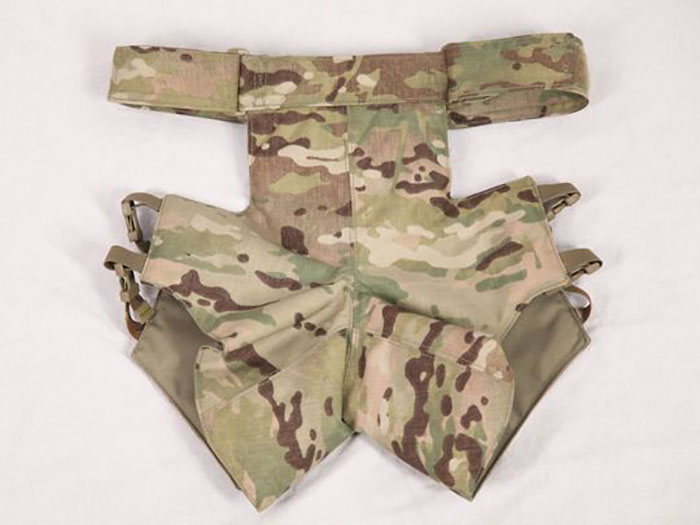
The Pelvic Protection system is more comfortable than the system it replaces. Photo: Program Executive Office Soldier courtesy photo
Modern threats, especially IEDs, have made injuries to the groin and femoral arteries tragically common. Years ago, the Army rushed to create ballistic undergarments and overgarments—nicknamed “combat diapers”—to reduce these casualties. While undeniably protective, the original versions were uncomfortable, especially on long patrols where they tended to rub and chafe.
The new Blast Pelvic Protector takes a different approach. Instead of a bulky add-on, it connects directly to the body armor, forming a sleeker outer layer that minimizes friction while improving comfort for soldiers who wear it day after day.
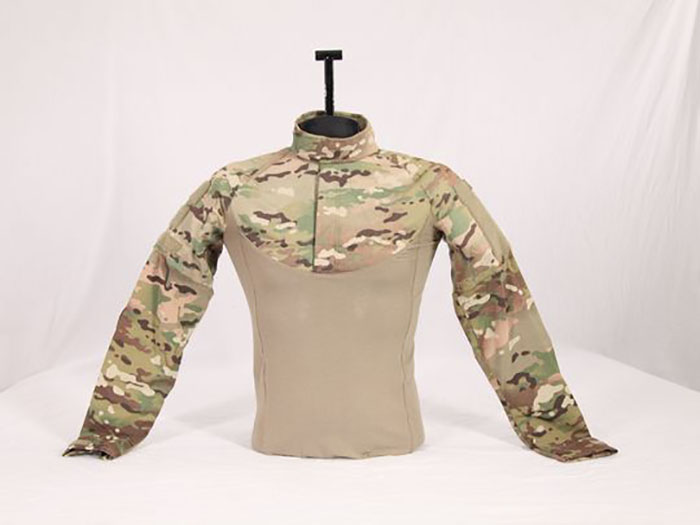
The Army’s new Ballistic Combat Shirt provides greater protection. Photo: Program Executive Office Soldier courtesy photo
One of the biggest upgrades is the shift from the old combat shirt to the Army’s new Ballistic Combat Shirt. The previous shirt functioned mostly as a comfortable base layer under the IOTV. The new BCS, however, adds real ballistic defense for the arms, neck, and upper chest without limiting movement. It eliminates the need for the old DAPS and stiff ballistic collars—gear that often made it hard for soldiers to shoulder a rifle quickly or turn their head while moving.
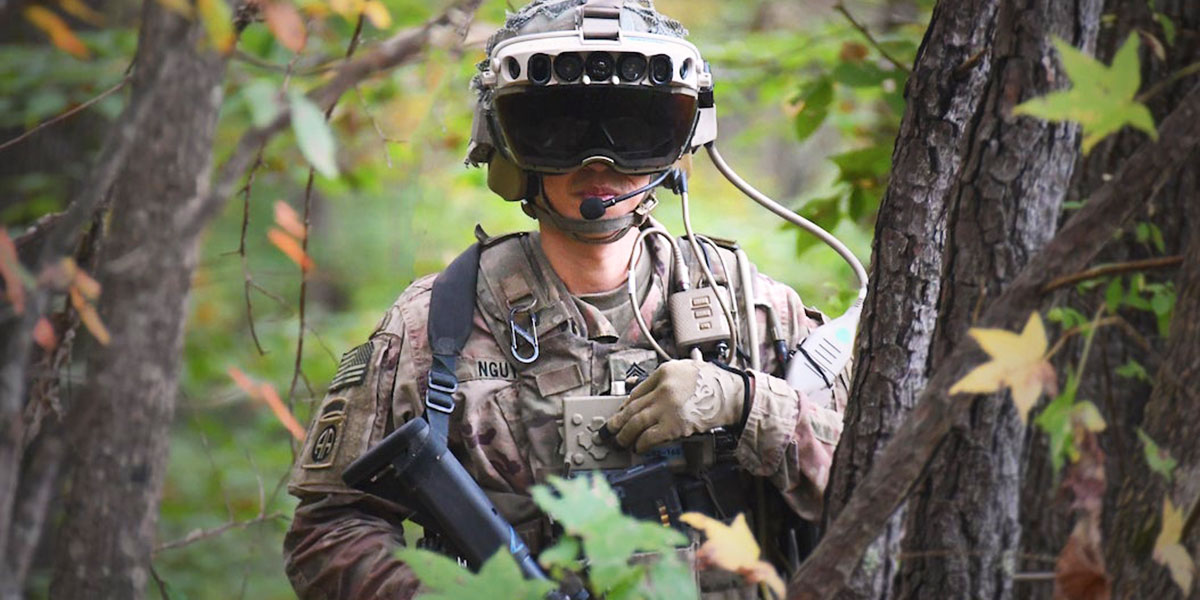
The Army is also redesigning its helmet, though this piece is still in the research phase. Engineers are trying to reduce weight while increasing protection, and early concepts include integrated jaw guards, built-in eye protection, and compatibility with improved night-vision systems.
New Soldier armor weighs less, offers more options
WASHINGTON (Army News Service) — The standard generation II improved outer tactical vest usually came in at around 26 pounds. But the new Torso and Extremity Protection system—currently being developed at Program Executive Office Soldier—cuts roughly five pounds while adding far more flexibility. Commanders can adjust configurations based on the mission’s environment, expected threats, and mobility demands.
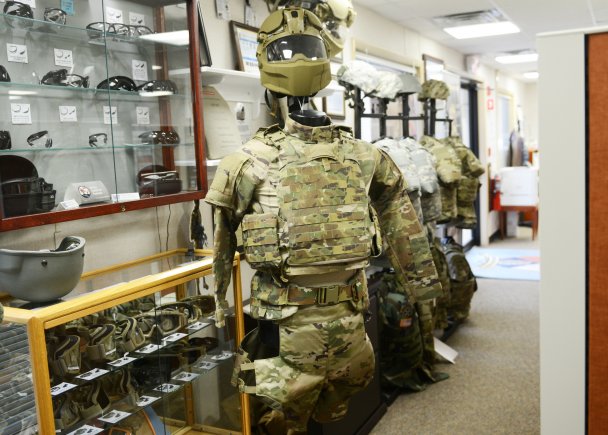
The Torso and Extremity Protection System under development at PEO Soldier reduces weight while adding adaptability. (Photo Credit: C. Todd Lopez)
The TEP forms a major part of the broader Soldier Protection System being built by PEO Soldier. This larger effort includes the TEP as well as a completely new head protection suite.
RANGE OF OPTIONS
The TEP is designed to fully replace the IOTV when needed, offering the same degree of ballistic safety but with considerably less weight. It includes several components: a modular scalable vest, the new ballistic combat shirt, the blast pelvic protection system, and a battle belt designed to shift load away from the shoulders and down to the hips.
With this system, commanders can order troops to wear full protection—equivalent to a max-load IOTV setup—or strip down to soft armor for missions where stealth and speed outweigh heavy protection.
Lt. Col. Kathy Brown, product manager for Personal Protective Equipment at PEO Soldier, explained that the goal is to give battlefield leaders the ability to tailor gear to each mission’s unique risk level.
BALLISTIC COMBAT SHIRT
The old IOTV sometimes required extra components such as deltoid protectors and detachable collars—pieces that were bulky, uncomfortable, and easy to lose. The TEP removes these add-ons entirely. The ballistic combat shirt has these protective sections built right in while remaining breathable and flexible. Troops wear the BCS under the modular scalable vest for full coverage without the awkward bulk of older systems.
Soldier testing so far shows high approval—around 95 percent acceptance. Current efforts focus on refining sizing and ensuring the shirt fits comfortably across a wide range of body types.
NEW PELVIC PROTECTION
The TEP also introduces an updated blast pelvic protection system designed to safeguard a soldier’s thighs and groin from shrapnel, burns, and other battlefield hazards. This new BPPS replaces the earlier two-layer system—the pelvic undergarment (PUG) and pelvic outer garment (POG), sometimes informally called “ballistic underwear.”
According to Lt. Col. Brown, the BPPS delivers the same level of protection as the combined PUG and POG while feeling far more natural to wear. Soldiers testing the new setup noted that it feels integrated, almost like an extension of their uniform trousers rather than a separate piece rubbing or shifting during movement. This improvement matters on long patrols, where earlier designs often caused discomfort and distraction.
BELT TAKES LOAD OFF SHOULDERS
The TEP also uses a redesigned battle belt intended to redistribute weight more evenly across the body. Instead of piling gear onto the shoulders—where radios, pouches, and tools had previously been clipped onto the IOTV—this new belt shifts much of that load down to the hips.
Brown explained that this shift in weight distribution isn’t just about comfort. Moving gear to the hips reduces fatigue, helps maintain balance during rapid maneuvers, and improves long-term endurance during long rucks or multi-hour firefights. The belt also provides limited ballistic protection of its own, giving soldiers an added layer of security in the lower torso region.
With ballistic testing already completed successfully, the TEP entered production shortly after, and early fielding was expected in late 2018 or early 2019.
NEW HELMET
Another major component of the Soldier Protection System is the integrated head protection system, or IHPS. In its full configuration, it resembles a compact, military-grade version of a motorcycle helmet—an intentional comparison, as both aim to protect the skull, face, and jaw from heavy impact and high-speed threats.
The IHPS is built around a lightweight base helmet similar to the polyethylene enhanced combat helmets already familiar to many soldiers. What sets it apart is its add-on system. Soldiers can attach a face visor for frontal protection, a mandible guard to shield the jaw, and a ballistic applique—an upgraded external shell layer that boosts protection against higher-caliber threats. When all parts are assembled, the system forms the “high threat configuration,” used for missions where hostile fire or blast risk is severe.
Brown noted that all deploying soldiers will eventually receive the base IHPS helmet. Those serving in particularly vulnerable roles—such as turret gunners—will attach the mandible guard and applique to create the full protective setup.
The helmet also features a side-mounted Picatinny rail for accessories and is designed to pair seamlessly with night-vision goggles and other optical systems.
NEW SUNGLASSES
While the IHPS visor adds ballistic protection, it does not darken against sunlight. This means soldiers in bright environments still need sunglasses or tinted goggles under the visor. To address this, PEO Soldier has introduced new adaptive-lens sunglasses authorized for military use.
Maj. Jaun F. Carleton showcased these new glasses, which begin completely clear. With a quick button press, the lenses darken instantly using thin LCD modules bonded directly to the glass. The transition happens in less than a second, allowing soldiers to move from indoor to outdoor environments—or from shadow to bright sun—without switching eyewear.
Carleton explained that the advantage is simplicity: one pair of eyewear can now handle all lighting conditions. These adaptive sunglasses also come in a full face-mask version for soldiers requiring expanded coverage. Units will be able to requisition them through the Soldier Protection System, and if production costs decrease, the Army may eventually issue them widely to deploying troops.
SOLDIER TESTING
Brown reported that the IHPS is projected to be fielded to deploying units sometime between 2020 and 2021. Before any part of the new protection system moves into widespread use, it undergoes extensive human-factors testing with real soldiers.
These evaluations take place over weeks at a time. Selected soldiers perform their usual mission tasks—rifle marksmanship, movement drills, ruck marches, room clearing, and sustained field activities—while wearing test versions of the new gear. The goal is to observe comfort, mobility, balance, thermal load, and overall performance under realistic, stressful conditions.
After completing the practical trials, soldiers fill out detailed qualitative surveys describing every aspect of their experience. Brown noted that troops do not hold back:
“They give us the good, the bad, the ugly,” she said. Their feedback determines design adjustments, fit improvements, and component changes.
She emphasized that soldier input is crucial because they are the ones who will rely on this equipment in life-or-death situations. There’s no point producing gear troops won’t willingly wear—and nobody understands the demands of the battlefield better than the soldiers who operate in it daily.