




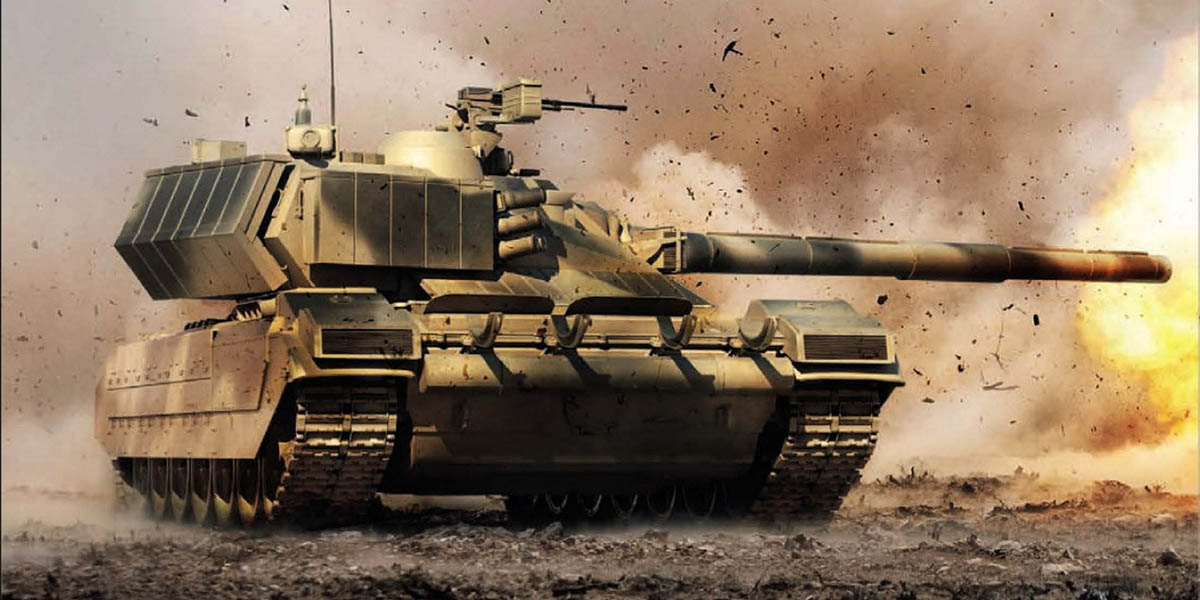
Main battle tanks, often shortened to MBTs, are built for one brutal purpose: to drive straight into the fight, absorb punishment, and still be standing when the dust settles. Among the many armored vehicles that exist today, a handful of machines stand out above the rest, combining cutting-edge firepower, advanced protection, and surprising mobility into one fearsome package.
When you look at the best of these steel giants, you’re seeing something close to the physical form of war itself. Every angle of armor, every millimeter of gun barrel, and every sensor or sight has been shaped by decades of combat experience and technological competition.
Although each tank on this list has its own distinct engineering philosophy and national design flavor, they all share some key traits: extremely powerful main guns, highly sophisticated armor systems, and mobility that lets them reposition quickly despite their enormous weight. Most of today’s leading MBTs are direct descendants of Cold War designs, born out of an arms race that demanded vehicles with the firepower of super-heavy tanks, the protection of heavy tanks, and the agility of lighter machines.
From the 1960s onward, the main battle tank gradually became the standard armored backbone of ground forces around the world. That role has not disappeared. In spite of drones, precision missiles, and new technologies, MBTs remain central to modern land warfare and are likely to continue shaping battlefields for years to come.

1. Challenger 2 – the British heavy hitter with record-breaking range
Design and manufacturer, country of origin: The United Kingdom – Alvis plc and BAE Systems Land & Armaments
Entry into active service: 1998
Why this tank is counted among the very best: Challenger 2 fields a remarkably accurate 120 mm rifled main gun and exceptionally strong armor, and it still holds the record for the longest confirmed tank-to-tank kill in history.
The Challenger 2 has earned a reputation as one of the most formidable and battle-ready main battle tanks in the world. Built around a highly effective 120 mm rifled gun, it specializes in putting precise, devastating fire on targets at extreme ranges while soaking up punishment that would cripple lesser vehicles. This combination of offensive power and resilience has made it a benchmark for heavy Western armor.
Modern versions of the Challenger 2 are equipped with advanced generations of Chobham-derived armor, incorporating layers of composite materials arranged to maximize survivability against kinetic penetrators and shaped-charge warheads. The tank is often described as exceptionally “hard to kill,” having survived direct hits in combat that would have destroyed older designs.
One of its standout achievements is its world-record long-range tank engagement. The main gun, with an aimed range of just over 5 km, demonstrated its capability in real combat, not merely in controlled tests. That kind of performance shows how lethal the Challenger 2 can be when crews fully exploit its optics, fire control, and gun system.
Beyond firepower and armor, Challenger 2 is equipped with sophisticated target acquisition systems that allow it to find, track, and engage threats quickly. Its fire control suite is among the fastest and most precise of any MBT, giving it a serious advantage in “first shot, first kill” scenarios. Introduced in 1998 to replace the Challenger 1, it is expected to remain in frontline British service well into the 2030s, with ongoing upgrade programs extending its capabilities even further.
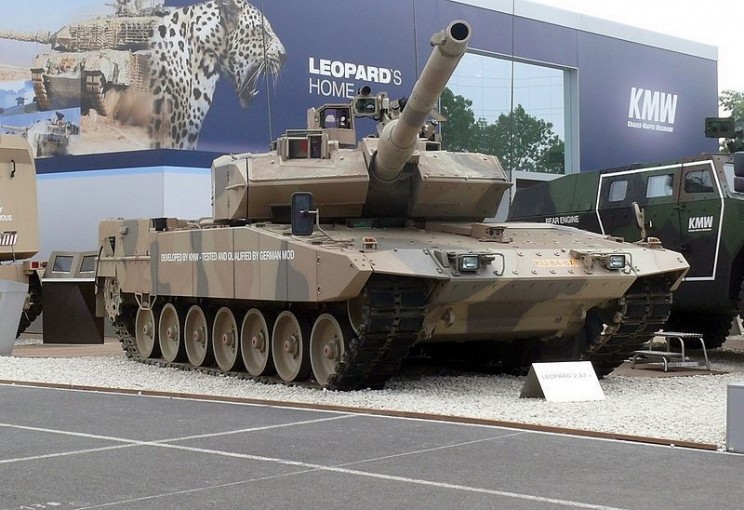
2. Leopard 2A7+ – Germany’s refined next-generation predator
Design and manufacturer, country of origin: Germany – Krauss-Maffei Wegmann and Maschinenbau Kiel
Entry into active service: 2014
Why this tank ranks among the elite: The Leopard 2A7+ is a next-generation evolution of the famous Leopard line, equipped with a highly capable main gun and advanced passive protection systems that offer 360-degree defense against a wide range of threats.
The Leopard 2A7+ is built on the proven foundation of the Leopard 2A6, itself widely respected as one of the finest tanks of its generation. First publicly shown in 2010 by Krauss-Maffei Wegmann and later adopted by the German Army, the 2A7+ refines the design for modern, high-intensity and urban warfare environments.
At its core, the tank mounts a 120 mm L55 smoothbore gun, an extended-barrel weapon capable of firing both standard NATO ammunition and advanced programmable 120 mm high-explosive rounds. This gives crews the flexibility to handle heavily armored opponents, lightly protected vehicles, barricades, and fortified positions with tailored effects.
Leopard 2A7+ also features sophisticated armor enhancements. Its passive protection system provides all-around coverage against anti-tank missiles, mines, improvised explosive devices, and rocket-propelled grenades. When mission requirements demand it, the tank can be fitted with additional modules to increase resilience in specific environments, such as urban combat zones where attack angles can be unpredictable.
Adaptability is a major strength of the Leopard series, and the 2A7+ continues that tradition. It can be outfitted with mine plows, rollers, and dozer blades to breach obstacles and clear safe paths for supporting forces. Despite its heavy protection, it remains highly mobile, reaching speeds of up to 72 km/h and offering a driving range of about 450 km on roads. The result is a tank that can strike quickly, endure punishment, and reposition without losing momentum.
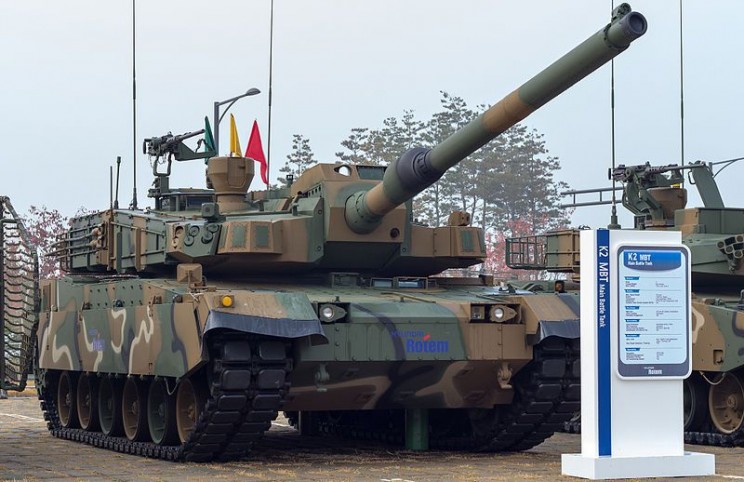
3. K2 Black Panther – South Korea’s cutting-edge armored hunter
Design and manufacturer, country of origin: South Korea – Hyundai Rotem
Entry into active service: 2016
Why this tank stands among the most advanced: The K2 Black Panther is considered one of the most sophisticated main battle tanks ever fielded, combining cutting-edge electronics, modern protection systems, and powerful armament in a highly mobile platform.
The South Korean K2 “Black Panther” is a showcase for modern tank design. Packed with advanced electronics, automated systems, and state-of-the-art protection, it represents the high-end of current MBT technology. It is also one of the most expensive tanks to produce, reflecting the complexity of its systems and the ambition of its designers.
Deliveries to the South Korean Army began in 2016, with roughly 100 units fielded initially and plans for around 200 more. The K2’s offensive power is comparable to that of the Leopard 2A7, with a modern 120 mm smoothbore gun capable of firing advanced kinetic and multi-purpose munitions. Its fire control system includes sophisticated sensors and an automated target tracking capability that reduces crew workload and increases engagement speed.
Defensively, the K2 makes extensive use of modular composite armor, the exact composition of which is classified. Explosive Reactive Armor (ERA) modules and an advanced passive protection system further enhance survivability against a mix of threats, including anti-tank missiles and projectiles. The tank is also fitted with an automatic target acquisition and fire control system that allows rapid engagement of multiple targets, even while on the move.
Another distinctive feature is its hydropneumatic suspension system, which allows the tank to “kneel,” “lean,” or raise and lower its hull. This not only improves cross-country mobility but also gives crews tactical options such as adjusting the hull to improve gun depression on uneven terrain or to reduce the tank’s visible profile behind cover.
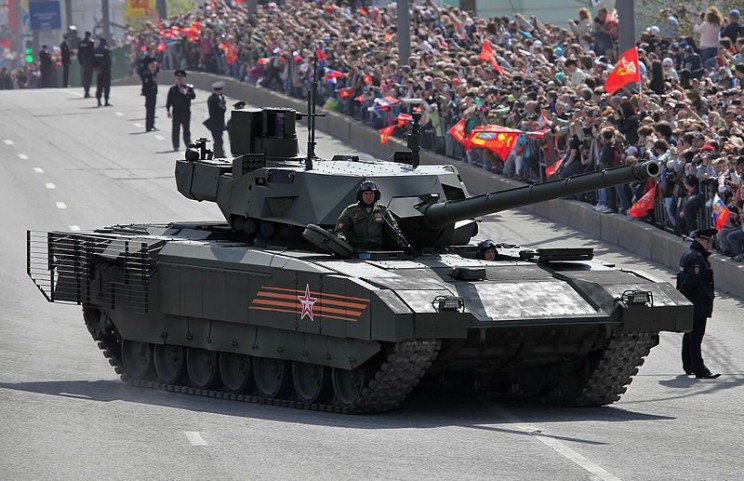
4. T-14 Armata – Russia’s unmanned-turret armor concept
Design and manufacturer, country of origin: Russia – Uralvagonzavod
Entry into active service: 2015
Why this tank is distinctive among modern MBTs: The T-14 Armata’s defining feature is its unmanned turret, which separates the crew from the main armament and represents a radical departure from traditional tank layouts.
The T-14 Armata is Russia’s most ambitious tank project in decades. Designed as a next-generation platform, it integrates several innovative features, many of which remain classified. The most striking of these is its fully unmanned turret, which places all three crew members inside an armored capsule at the front of the hull, away from ammunition and other high-risk components.
Russia has long-term plans to build around 130 T-14 units, with an initial batch of roughly 20 or so delivered for testing and limited deployment. The tank’s primary weapon is a 125 mm 2A82-1M smoothbore cannon, which reportedly offers higher muzzle energy than the gun used on the Leopard 2. This gives it potentially superior armor penetration with the latest kinetic energy rounds.
The T-14’s turret and hull are fitted with Malachit dual-explosive reactive armor, providing layered protection against a range of incoming threats. On top of that, the tank incorporates the Afghanit Active Protection System, designed to detect, track, and intercept incoming anti-tank missiles and projectiles before they can strike. This combination of passive and active defenses is intended to dramatically increase battlefield survivability.
The unmanned turret concept, combined with an armored crew capsule, is meant to keep the crew alive even if the turret is hit or damaged. While the full extent of its abilities remains closely held by Russian authorities, the T-14 stands out as one of the boldest reinterpretations of what a modern main battle tank can be.
5. M1A2 SEP Abrams – the U.S. Army’s battle-proven powerhouse
Design and manufacturer, country of origin: United States – General Dynamics Land Systems
Entry into active service: 1999 (M1A2 SEP configuration)
Why this tank is highly regarded: The M1A2 SEP is a thoroughly combat-tested main battle tank powered by a multifuel turbine engine, upgraded armor, and modernized systems drawn from years of battlefield experience.
The M1 Abrams family has become one of the most recognizable symbols of modern armored warfare. The M1A2 System Enhanced Package (SEP) represents a major upgrade over earlier versions, adding improved armor protection, upgraded electronics, and refined situational awareness tools. It was built on lessons learned from earlier conflicts, where Abrams tanks demonstrated both staying power and lethal effectiveness.
Entering service in 1999, the M1A2 SEP saw an initial order of 240 new tanks, along with upgrades that brought 300 older M1A2s up to the SEP standard. An additional 400 M1A1 models were also modernized to match the newer configuration. These upgrades focused on survivability and digital integration, turning the Abrams into a highly networked platform able to share information and coordinate with other units efficiently.
The Abrams is often cited as one of the best-protected tanks available. Its armor includes advanced composite structures and, in some sections, reinforcement with depleted uranium inserts to increase resistance to kinetic penetrators and shaped-charge attacks. While its 120 mm L44 smoothbore gun is slightly shorter than the Leopard 2A7’s L55, it still delivers devastating firepower with modern ammunition.
One of its defining features is the multifuel gas turbine engine, which provides excellent acceleration and performance, especially on roads or prepared surfaces. The trade-off is high fuel consumption and the need for careful maintenance, but for many operators, the mobility benefits are worth the logistical cost. The U.S. Army plans to keep upgrading and operating the Abrams well into 2050, ensuring that it remains central to American armored doctrine for decades.
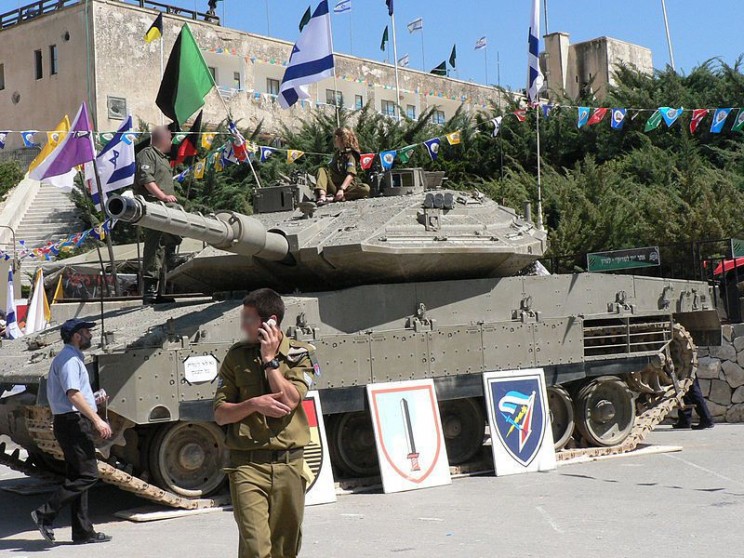
6. Merkava Mark 4 – Israel’s heavily shielded “chariot”
Design and developer, country of origin: Israel Defense Forces – Israel
Entry into active service: 2004
Why this tank is so respected: The Merkava Mark 4 is designed to absorb enormous punishment and continue fighting, with extensive armor coverage and a layout that prioritizes crew survivability.
The Merkava series, whose name means “Chariot” in Hebrew, reflects Israel’s hard-earned understanding of armored warfare in complex, high-threat environments. The Merkava Mark IV is the latest mainline version, building on earlier Marks that first entered service in 1979. It is specifically designed to protect its crew and remain combat-effective under intense fire.
One of the Merkava Mk IV’s most distinctive features is its fully modular armor. Protective modules cover all sides of the tank, including the upper surfaces and V-shaped belly. This modularity allows damaged sections to be replaced more quickly than on traditional designs, helping get vehicles back into the fight after repair rather than pulling them permanently from service.
Like other leading MBTs, the Merkava Mark 4 is equipped with an Active Protection System that detects and intercepts incoming projectiles such as anti-tank missiles or rockets. Another unique design choice is the placement of the engine at the front of the hull, which acts as an additional barrier between incoming rounds and the crew compartment.
In terms of firepower, the Merkava is armed with an Israeli-designed 120 mm smoothbore gun, capable of firing a range of advanced ammunition suitable for both armored targets and fortified positions. Around 360 Merkava Mark 4 tanks have been produced so far, with roughly 300 more on order, ensuring it will remain a mainstay of Israeli armored forces for years.
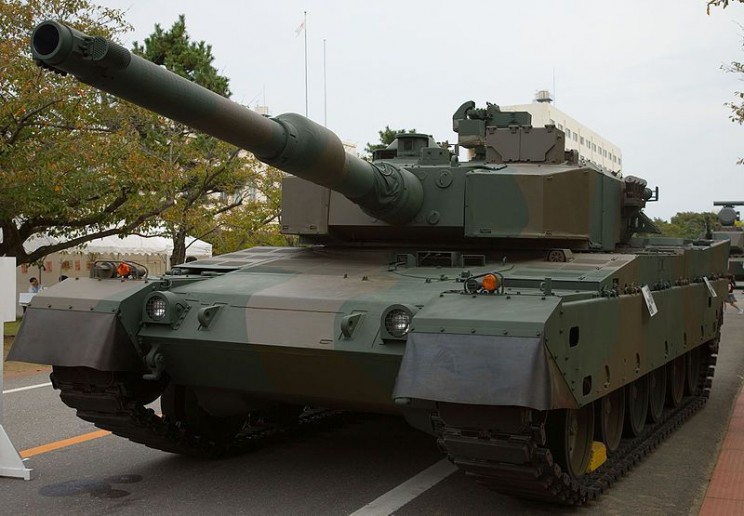
7. Type 90 – Japan’s older yet formidable armored contender
Design and manufacturer, country of origin: Mitsubishi Heavy Industries – Japan
Entry into active service: 1990
Why this tank earns its place: The Type 90 was engineered to match Western MBTs of its era and combines strong firepower, sophisticated armor, and advanced suspension for its time.
The Japanese Type 90, or Kyū-maru-shiki-sensha, serves as one of Japan’s primary main battle tanks and remains a serious presence on the battlefield. Developed by Mitsubishi Heavy Industries in cooperation with German manufacturers Krauss-Maffei and MaK, it incorporated contemporary Western tank technologies into a platform tailored to Japan’s own strategic needs.
Full-scale production began in 1992, and when it was introduced, the Type 90 stood among the most advanced tanks of its generation. Japan initially planned a fleet of about 600 units, but high production costs led to a reduction to around 340 vehicles. Even at that smaller number, the tank represented a significant investment in high-end armor.
Its primary weapon is a Rheinmetall-designed 120 mm smoothbore gun produced under license in Japan. The gun is compatible with standard NATO ammunition and is fed by a bustle-mounted automatic loading system that reduces crew workload and maintains a high rate of fire. This autoloader contributed to the decision to operate the tank with a smaller crew than many Western counterparts.
Protection comes from modular ceramic/steel composite armor, providing strong resistance to contemporary anti-tank threats. The hydropneumatic suspension allows the Type 90 to “kneel” or “lean,” changing hull attitude for better gun depression or a reduced profile behind cover. This gives Japanese crews extra tactical options in areas with varied terrain, further enhancing its combat effectiveness.
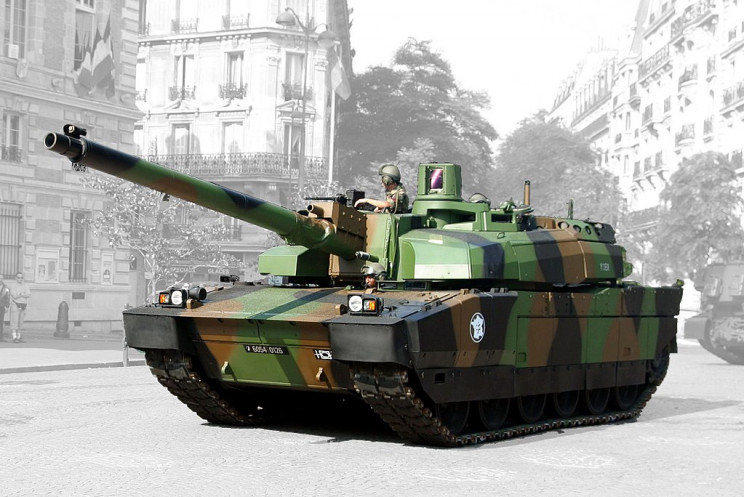
8. Leclerc – France’s agile and expensive battlefield heavyweight
Design and manufacturer, country of origin: France – GIAT Industries (now Nexter)
Entry into active service: 1992
Why this tank is counted among the top machines: The Leclerc mounts a highly accurate 120 mm main gun and modular composite armor, and it was named in honor of General Philippe Leclerc de Hauteclocque, a key figure in the liberation of Paris during World War II.
The French-designed Leclerc is widely recognized as one of the world’s most capable main battle tanks. Created by GIAT Industries, now known as Nexter, it balances firepower, protection, and mobility with a focus on advanced automation and lighter weight compared to some of its peers. Over the years, Leclerc tanks have seen deployment in various operational environments, further proving their practicality in real missions.
The Leclerc serves with both the French Army and the armed forces of the United Arab Emirates. Each unit is expensive, costing in the neighborhood of 9.3 million euros, reflecting the high level of technology and systems integration packed into the vehicle. It eventually replaced the older AMX-30 MBTs in French service, modernizing the nation’s armored forces.
Roughly 400 Leclerc tanks are in French service, with additional units operated by the UAE. The tank’s 120 mm main gun is supported by a modern fire control system and autoloader, allowing for rapid engagement cycles and a reduced crew size. Modular armor packages can be adjusted or upgraded over time, helping keep the vehicle relevant as new threats emerge.
Many French Leclercs have undergone upgrades under the AZUR program, which adds features tailored to urban combat. Additional armor, side skirts, and other protective enhancements make the tank better suited to environments where attacks can come from elevated angles, close ranges, or unconventional directions.
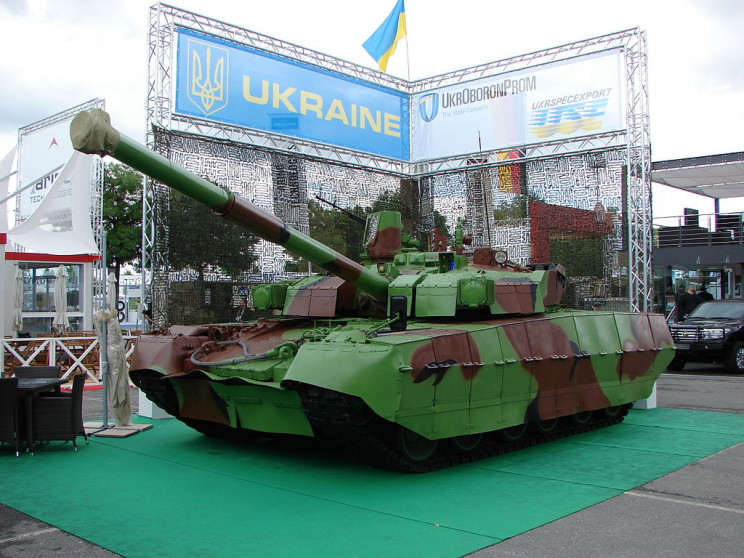
9. Oplot-M – Ukraine’s upgraded and deadly T-84 variant
Design and manufacturer, country of origin: Ukraine – Kharkiv Morozov Machine-Building Design Bureau
Entry into active service: 2009
Why this tank is on the list: The Oplot-M is a heavily upgraded evolution of the T-84 design, capable of engaging both ground targets and low-flying, low-speed aerial threats with powerful, modern armament.
The Oplot-M represents the most advanced main battle tank currently fielded by the Ukrainian Army. Derived from the older T-84, it incorporates a range of improvements in armor, electronics, and defensive systems to meet contemporary battlefield demands. This includes updated composite armor, new electronic countermeasure capabilities, and a more sophisticated fire control suite.
First entering Ukrainian service in 2009, the Oplot-M later attracted international interest, with the Royal Thai Army placing orders for the tank. Its layout follows a conventional pattern with the engine in the rear and a centrally located turret, making it familiar to crews trained on earlier Soviet-style designs.
The main armament is a KBA-3 125 mm smoothbore gun, which can fire standard tank rounds as well as laser-guided missiles. This gives the Oplot-M an extended engagement envelope, allowing it to target tanks, armored vehicles, and hovering helicopters at ranges of up to about 5,000 meters. The ability to use guided munitions significantly increases hit probability against moving or partially concealed targets.
Combined with modern optics, thermal sights, and improved protection, the Oplot-M provides Ukraine and export customers with a tank that can compete with many contemporary MBTs on the international stage.
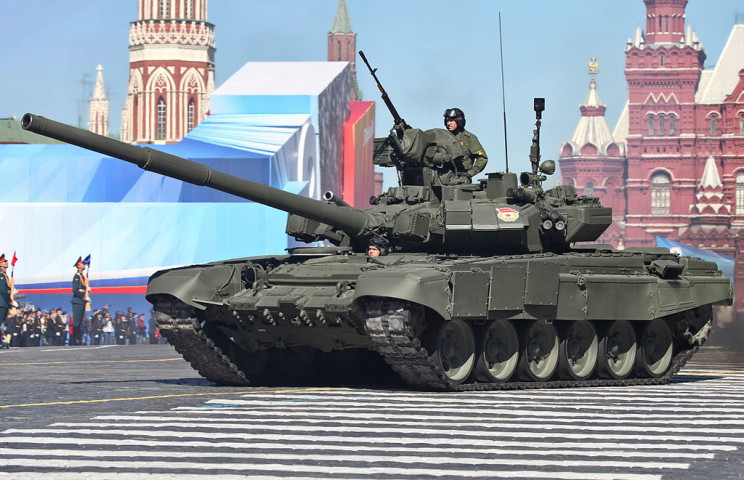
10. T-90 – Russia’s widely deployed modern war machine
Design and manufacturer, country of origin: Russia – Kartsev-Venediktov Design Bureau / Uralvagonzavod
Entry into active service: 1992
Why this tank is regarded as one of Russia’s most advanced: Modern T-90 variants combine a powerful 125 mm main gun, the ability to fire laser-guided missiles, and layered defensive systems including reactive armor and infrared jamming.
The Russian T-90 is one of the most recognizable third-generation main battle tanks and has been exported to several countries. First entering service in the early 1990s, it evolved from earlier T-72 designs but introduced significant upgrades in protection, firepower, and onboard electronics. While no tank is truly invulnerable, the T-90 has earned a reputation as a dangerous and capable opponent.
The latest versions, such as the T-90S and other modernized variants, are heavily improved over earlier models. They retain the familiar low profile of Soviet-style tanks but incorporate composite and explosive-reactive armor, smoke grenade launchers, and infrared jamming systems to disrupt incoming guided weaponry. This layered defense makes it harder for anti-tank missiles and projectiles to score effective hits.
At the heart of the T-90’s offensive capability is its 125 mm 2A46 smoothbore gun. Like the Oplot-M, it can fire a range of ammunition types, including laser-guided anti-tank missiles with an effective range of around 4,000 meters. Standard rounds include armor-piercing discarding sabot (APDS), high-explosive anti-tank (HEAT), and high-explosive fragmentation (HE-FRAG) shells, as well as specialized shrapnel projectiles with timed fuses.
By combining relatively compact size, substantial firepower, and a range of protective systems, the T-90 remains a core element of Russian armored forces and a key reference point in discussions about modern tank warfare.